A continuous mineral finish for walls, floors and wet rooms.
Two to three millimetres of cement-based coating applied over existing tiles, screed or plasterboard. No joints, no demolition, and a surface that can be matched to the architecture rather than to a tile catalogue.
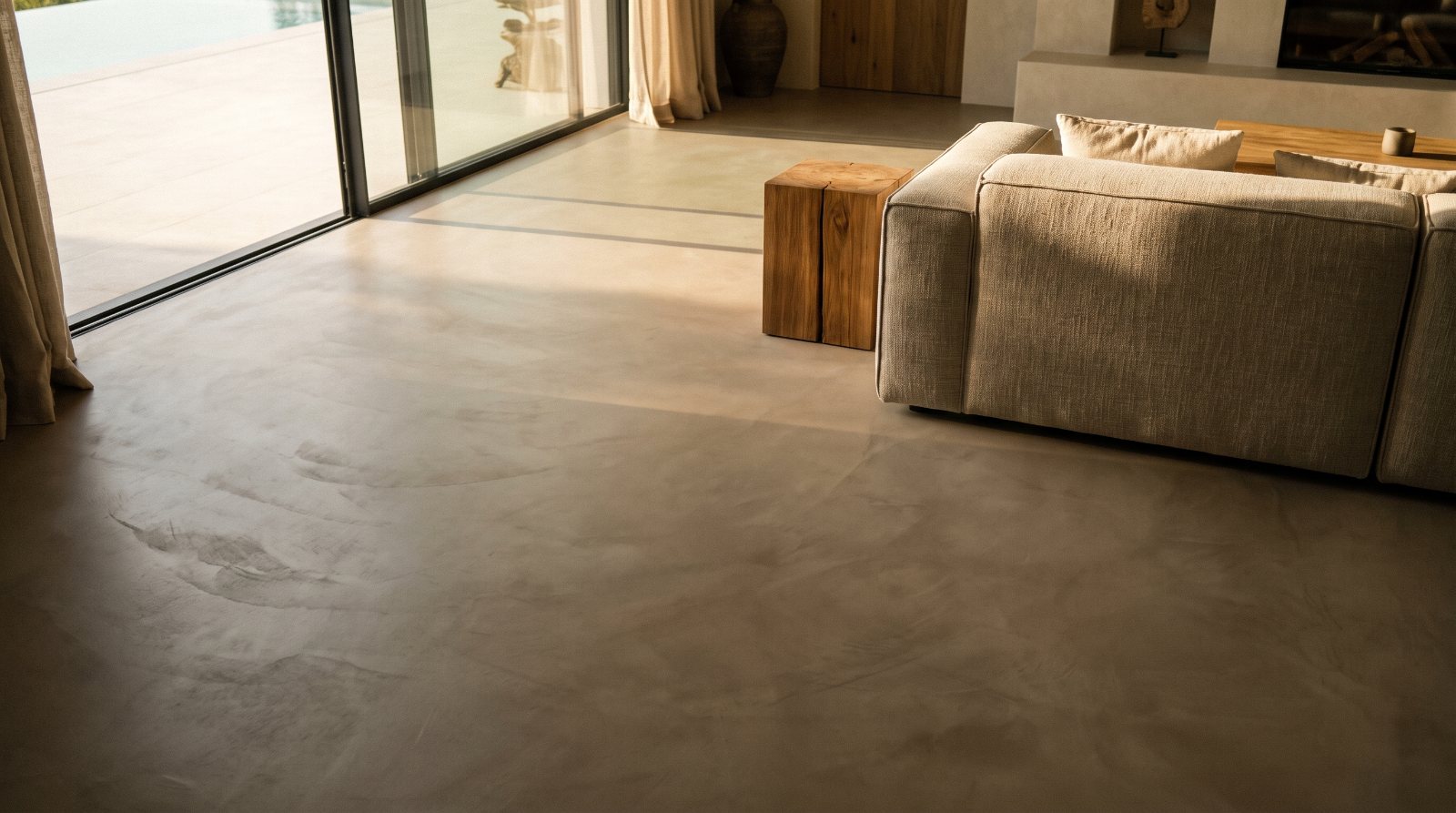
2–3 mm build-up
Thin enough to keep existing door heights and thresholds.
Over existing surfaces
Applied over stable tiles, screed, plasterboard and concrete.
Sealed for wet areas
Bathrooms and shower walls with the correct sealer build-up.
Matte to satin
Sheen chosen with the sealer, not with the base coating.
Where microcement is used
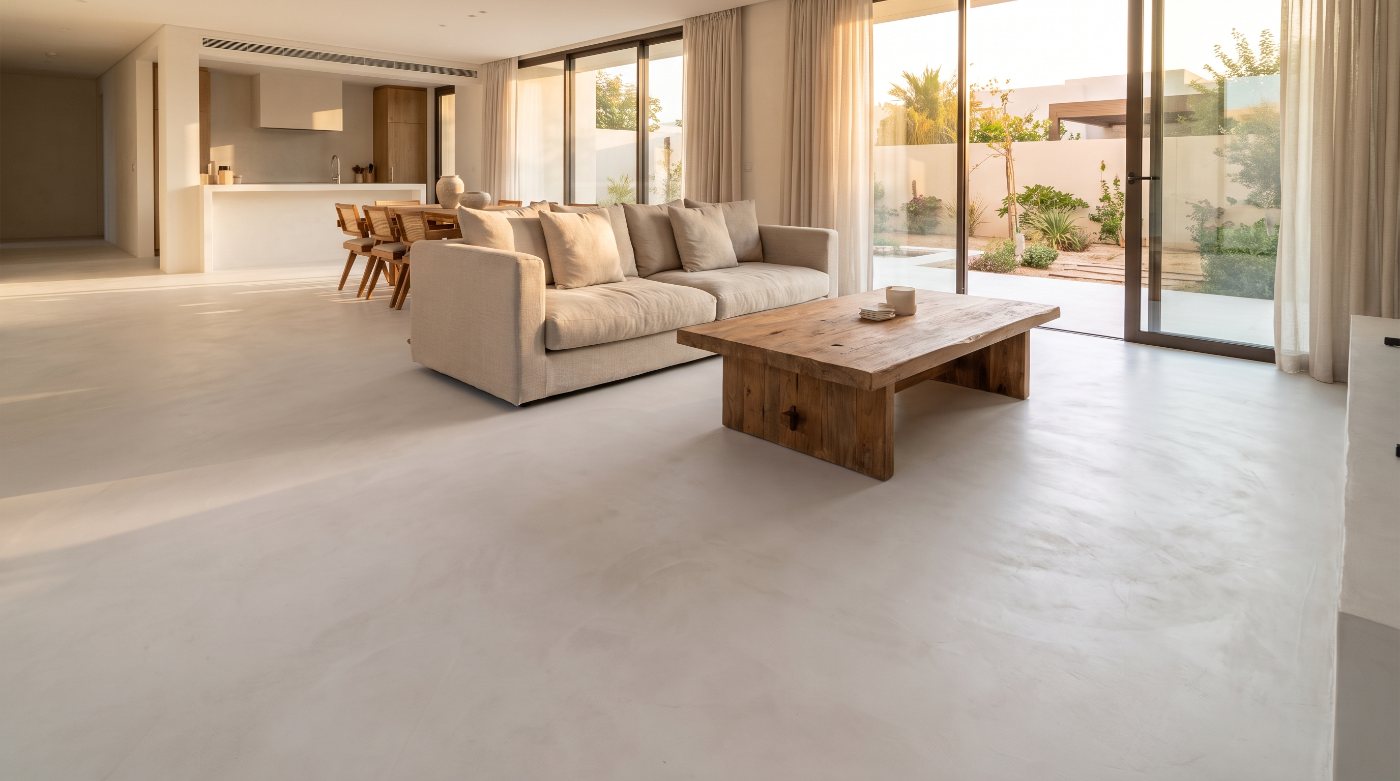
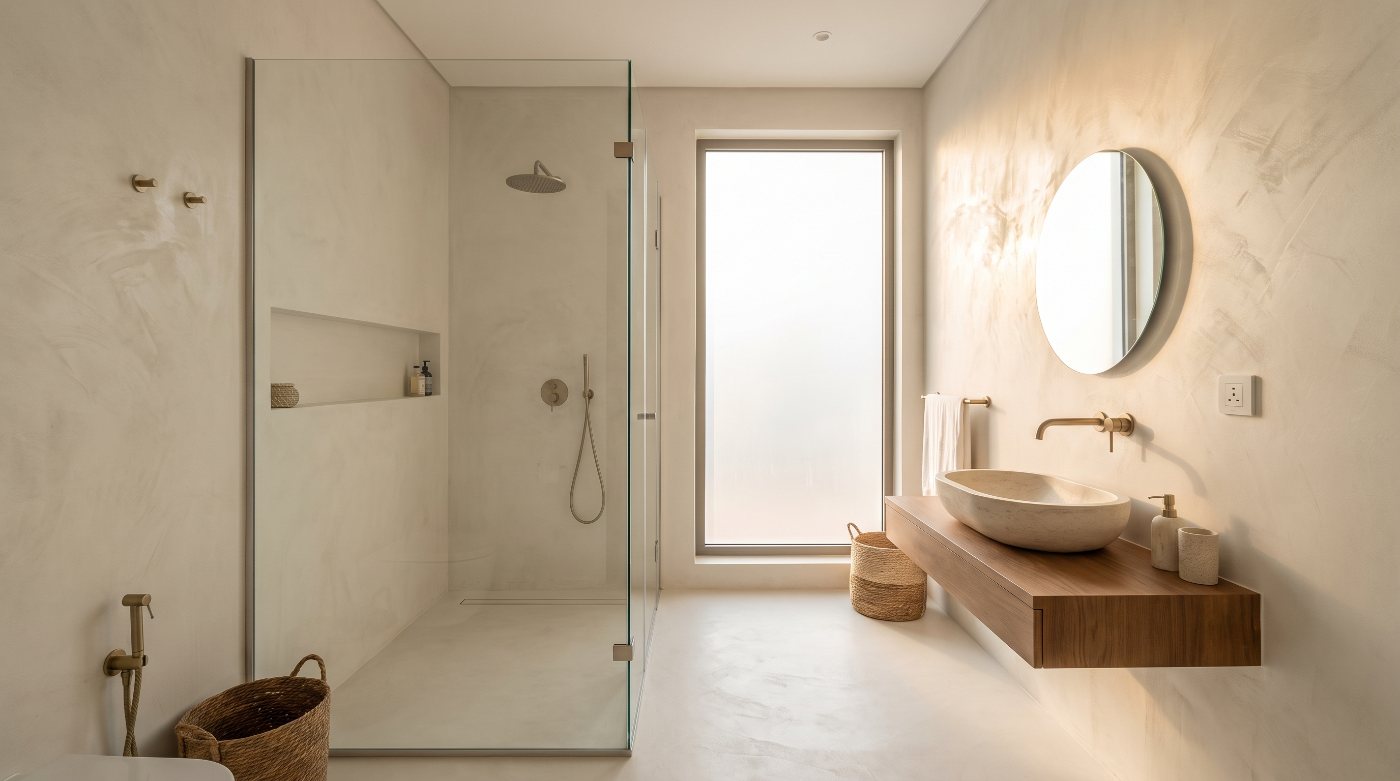
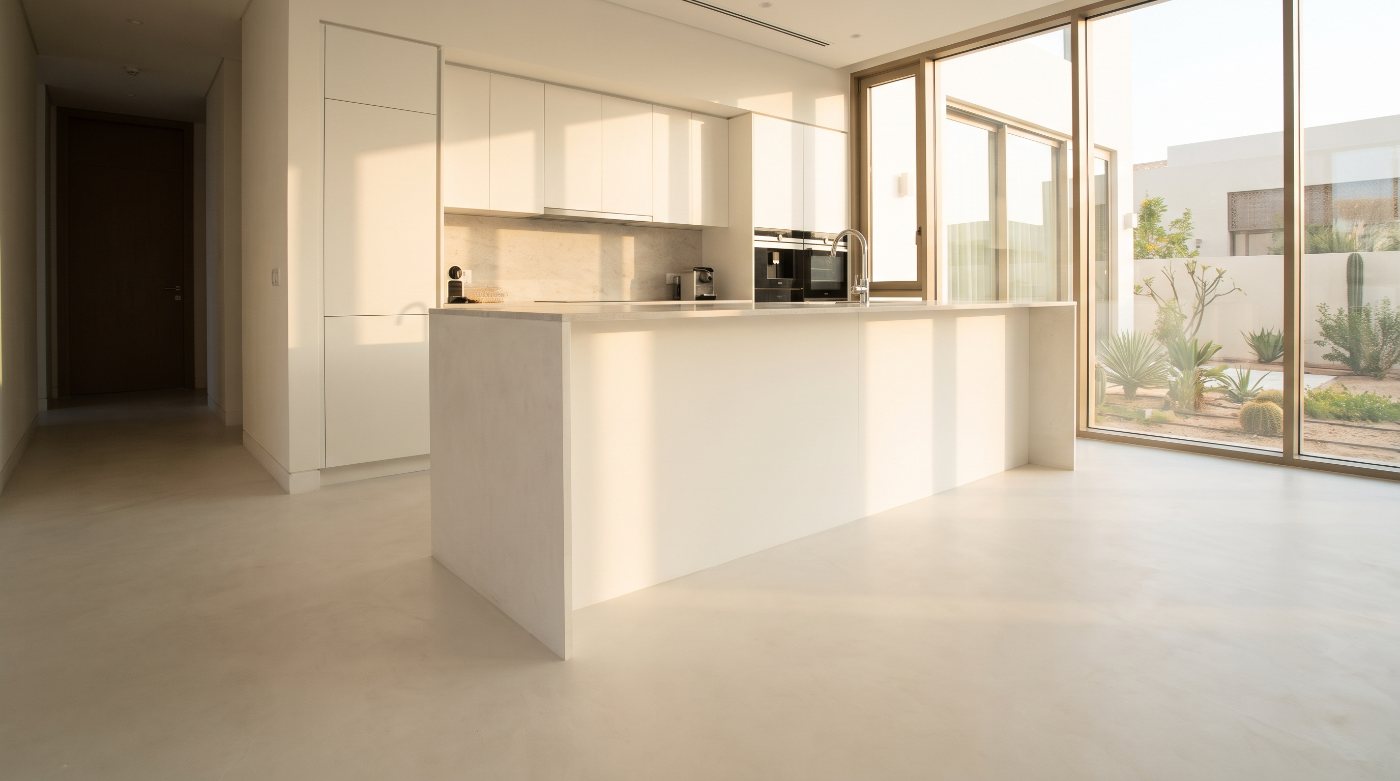
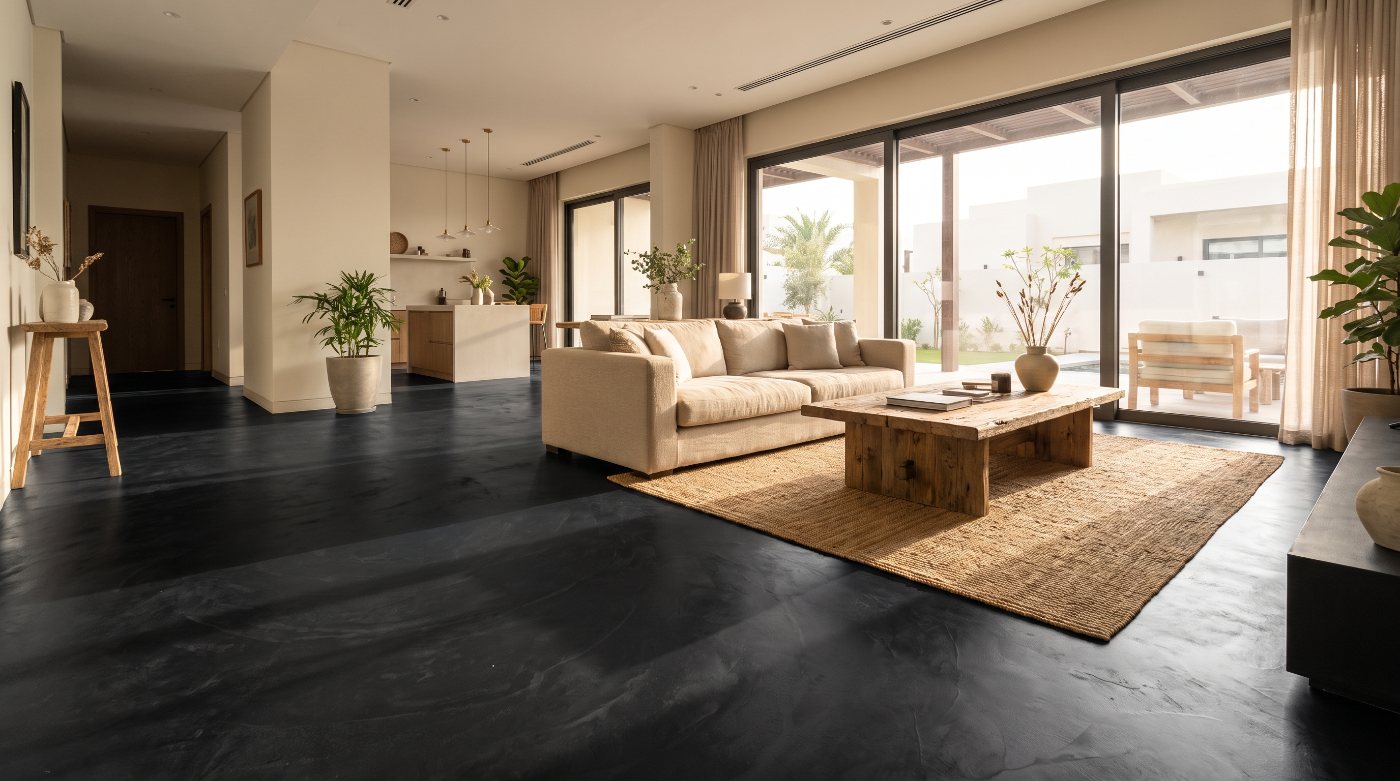
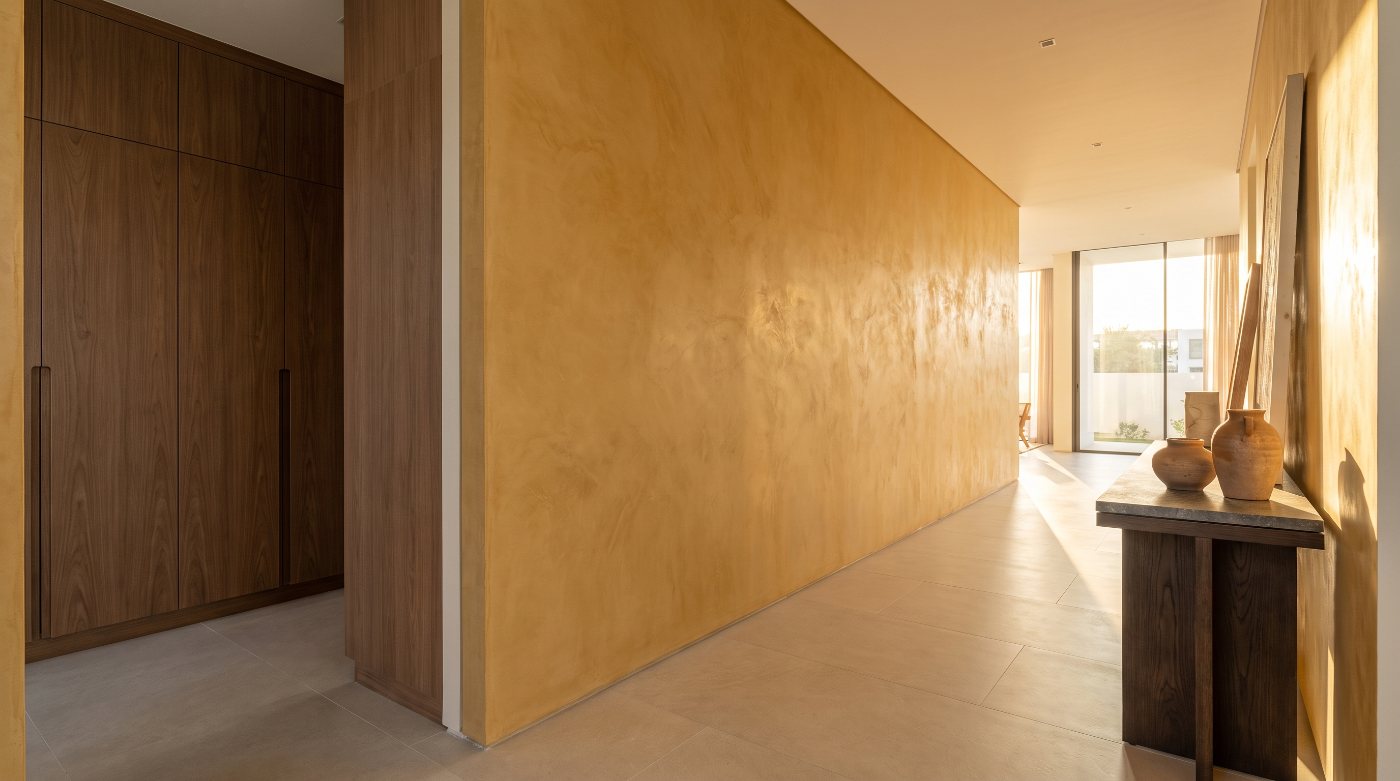
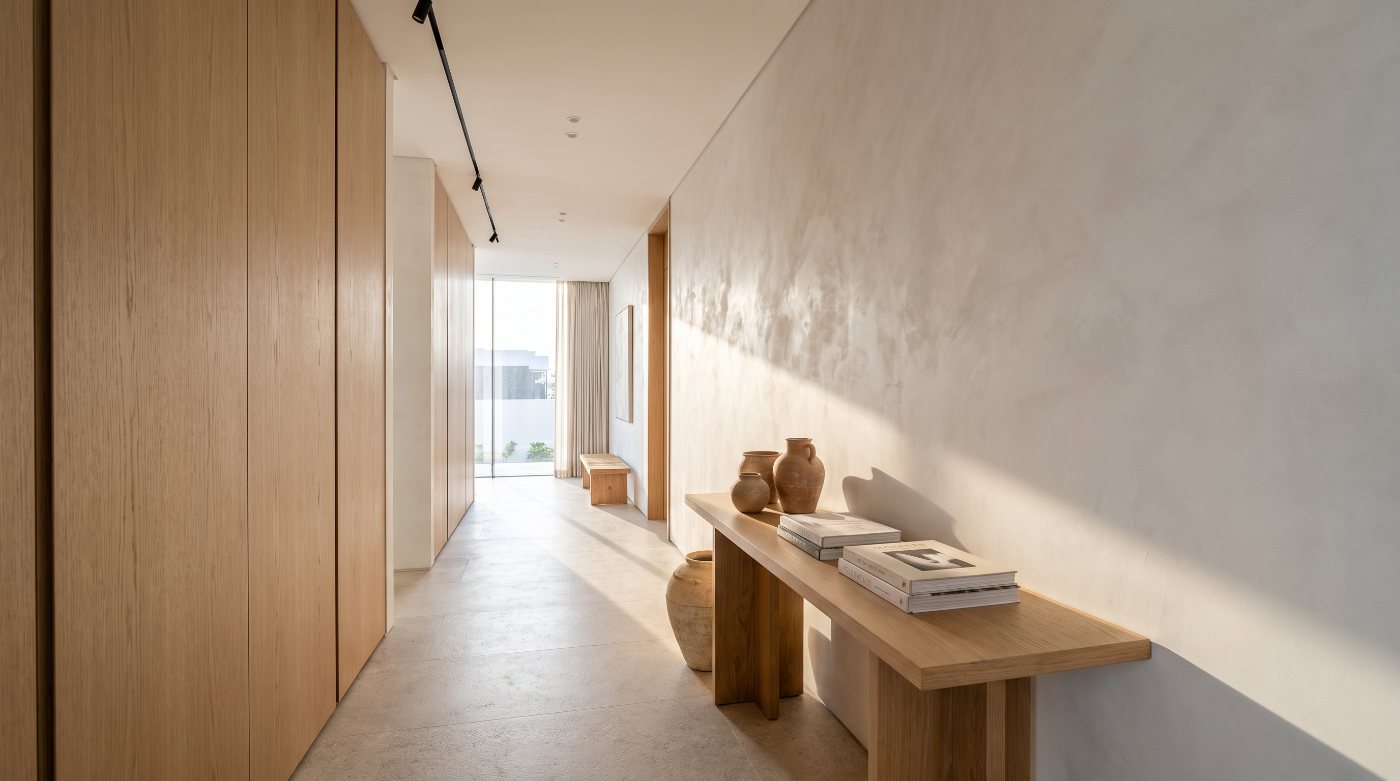
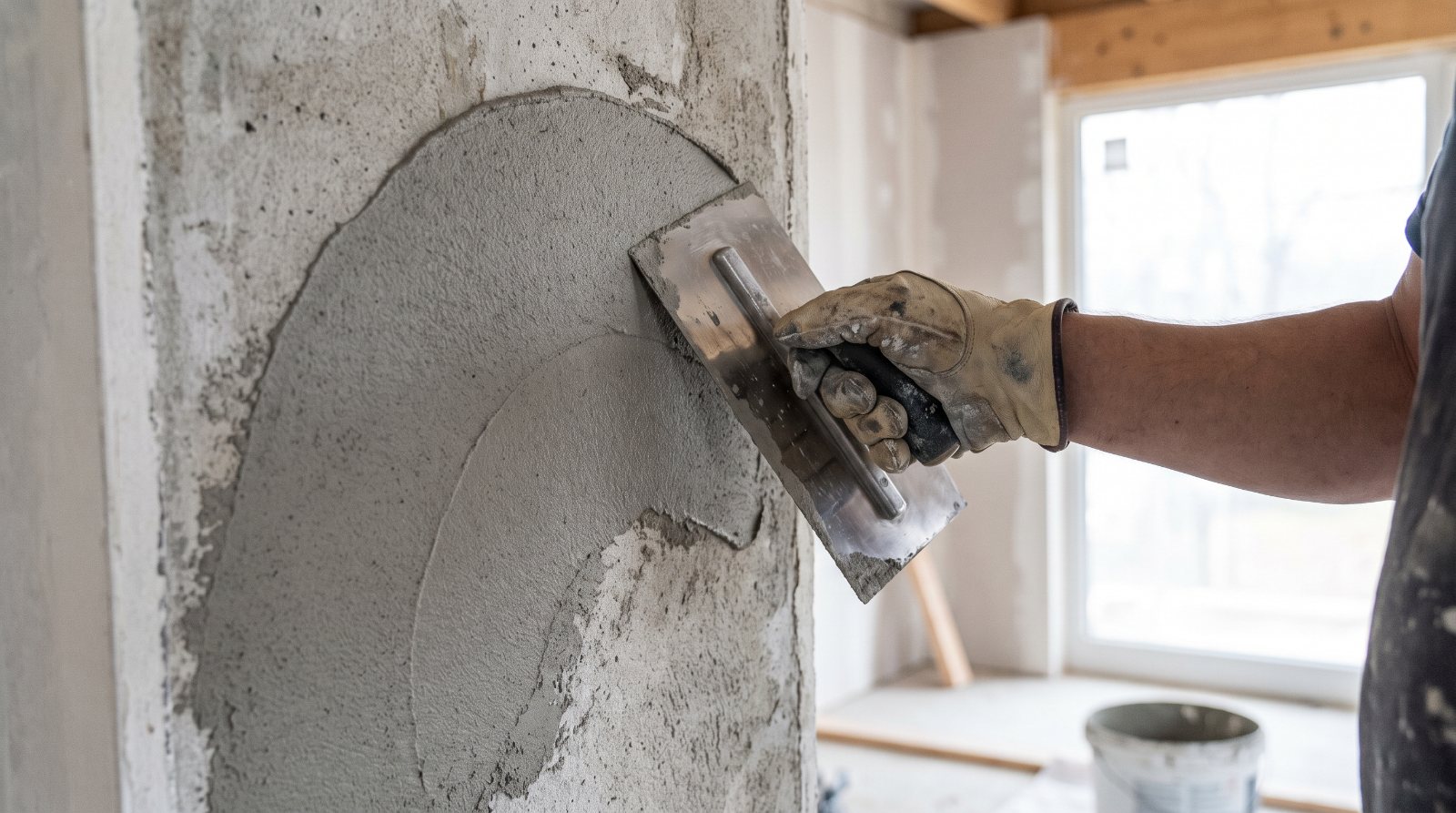
Four layers, two to three millimetres
Primer
Adhesion layer selected for the substrate — tile, screed or plasterboard.
Base coats
Two coarse coats with mesh reinforcement over joints and movement-prone areas.
Finish coats
Two fine coats trowelled to the chosen texture and colour.
Sealer
Two to three sealer coats set the sheen and the water and stain resistance.
How much material the surface needs
Enter the area and the surface type. Quantities cover primer, base coats, finish coats and sealer, rounded up to complete packs.
Tell us about the surface
Send the area, the existing surface and photographs. A manager confirms the build-up, the sealer and the material list.
Microcement questions
Can microcement go over existing tiles?+
Usually yes, provided the tiles are sound, well bonded and correctly primed. Hollow or moving tiles are removed or re-fixed first, and joints are reinforced with mesh in the base coats.
Is it suitable for bathrooms and showers?+
Yes, with the wet-area build-up: waterproofing beneath the coating and an additional sealer coat above it. The waterproofing layer, not the microcement, keeps the water out.
How long before the surface can be used?+
Light foot traffic is normally possible a day after the last sealer coat, with full chemical resistance developing over the following week. The applicator confirms the schedule for your conditions.