The 10 mm system for surfaces people walk on outdoors: terraces, balconies, garden paths, courtyards and the deck around a pool. Water drains through the stone rather than across it, so the surface stays dry underfoot after irrigation or a pool splash.
Where the pedestrian system goes
The same 10 mm system covers every outdoor surface that carries people rather than wheels. What changes from one to the next is the detailing — falls, edges and the finish.
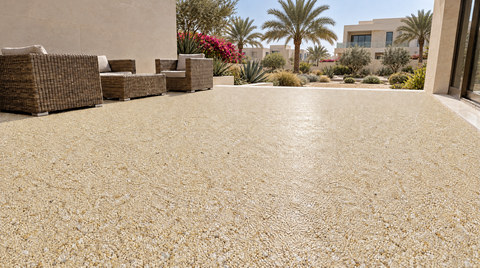
Laid over the existing screed or tiles, with falls carried to the outlet. On a balcony the edge detail and the drip line matter more than the stone.
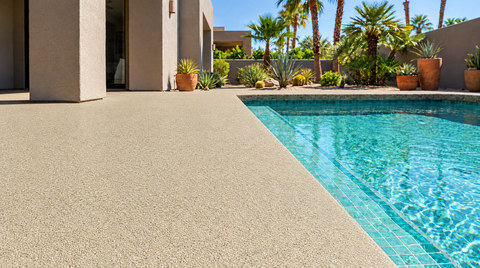
The deck and coping zone around the basin, walked on barefoot and wet. Open pore for grip and drainage. The bowl itself is a separate system.
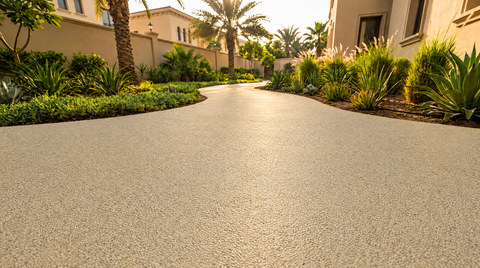
Over a concrete base with a fixed edge on both sides. Irrigation water drains through the stone instead of standing on the path.
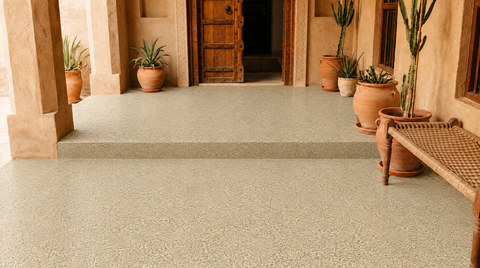
Large open areas and villa entrances. Where people eat or drink outdoors, a PU sealer closes the surface so spills wipe off.
Specification
Consumption figures are the same ones the calculator above uses. They assume a nominal 10 mm layer on a flat, primed base — a surface with deep falls or an uneven screed will take more.
Before the stone goes down
Pedestrian stone carpet is permeable: water passes straight through the 10 mm layer. That only helps if the surface beneath it can carry the water away. The stone layer does not create falls — it follows the ones already in the base.
Water drains through the stone and runs along the base to an outlet or edge. On balconies and roof terraces, check the waterproofing beneath before any layer goes on top.
Paths and terrace edges are finished against a fixed border — kerb, profile or wall. An unsupported edge is where aggregate starts to loosen first.
Binder working time drops as the base heats up. In summer, outdoor work runs early morning or evening, with the aggregate kept out of direct sun.
What the system consists of
2K Epoxy Primer on absorbent, smooth or sealed concrete: spread thin, broadcast with quartz sand, left to cure, then the loose sand is swept off so the binder keys into a stable surface. The cured primer is a closed film — water that passes through the stone carpet runs off along the falls.
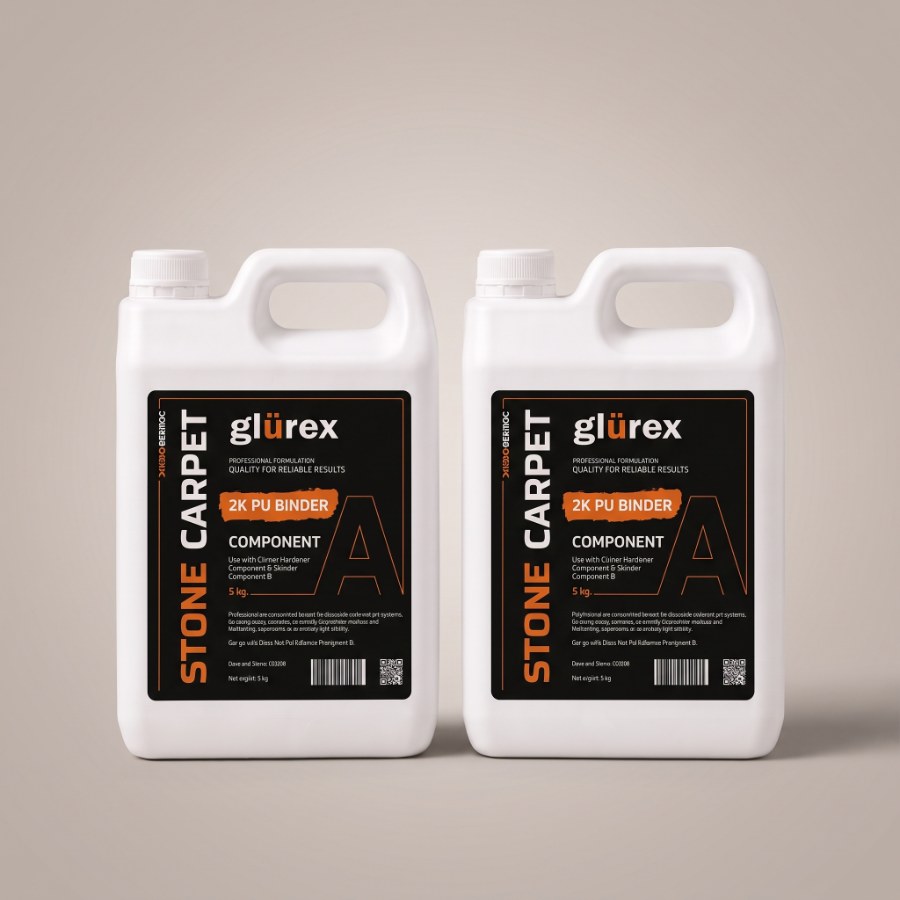
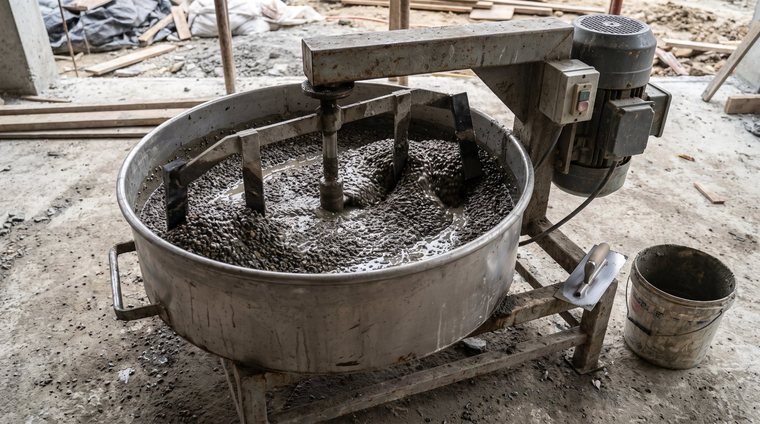
3–5 mm natural stone mixed with transparent polyurethane in a forced-action mixer, then trowelled to 10 mm in one pass.
Semi-gloss PU or matte acrylic sealer, two coats. Closes the surface for easier cleaning — at the cost of some drainage and grip.
Choosing the finish
The one decision on this system that changes how the surface behaves. It is the Finish option in the calculator.
No topcoat. Water drains straight through, the stone texture gives the most grip underfoot, and nothing sits on the surface to wear.
For: pool surrounds, garden paths, terraces with irrigation
Two coats of matte acrylic close the pores. Spills and dust wipe off instead of settling between the stones; the look stays natural.
For: outdoor dining, courtyards, covered terraces
Two coats of polyurethane deepen the colour of the stone and give the hardest-wearing, wipeable surface. Smoother underfoot — avoid it where people walk barefoot and wet.
For: entrances and feature areas under cover
Not sure this is the right system?
| Pedestrian Areas · this page | High-Load Areas | Indoor Areas | |
|---|---|---|---|
| Thickness | 10 mm | 20 mm | 10 mm |
| Load | Foot traffic | Cars and light vehicles | Foot traffic, furniture |
| Typical surfaces | Terraces, paths, pool surrounds | Driveways, carports, parking | Living areas, hallways, stairs |
| Drainage | Permeable | Permeable | Usually sealed |
| — | Driveway system → | Interior floor system → |
Pedestrian Areas — questions
No. At 10 mm the pedestrian system is built for foot traffic, and wheel loads — especially where tyres turn on the spot — will loosen the surface. For driveways, carports and anywhere a car may park, use the 20 mm driveway system.
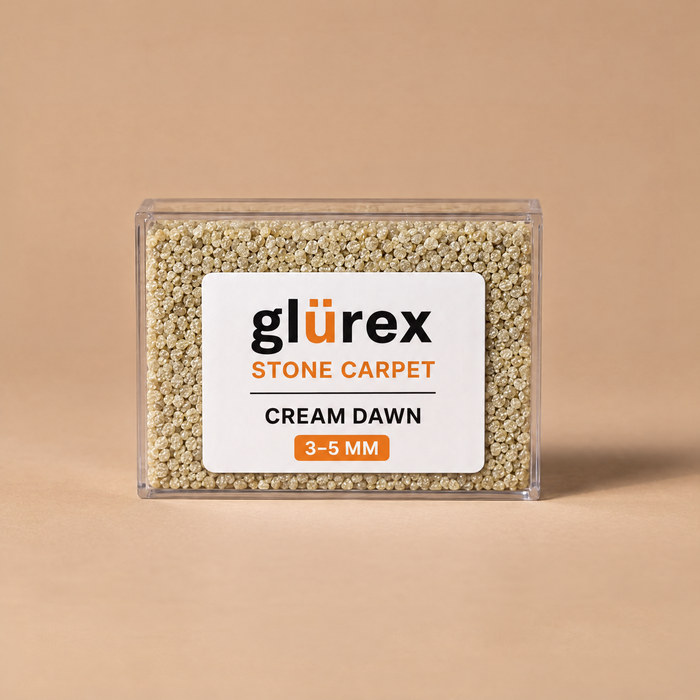
Any stone surface in direct Gulf sun gets warm. Colour makes the biggest difference: light shades such as Cream Dawn, Pearl Horizon and Ivory Rock absorb far less heat than Steel Mesa or Black Onyx. Around a pool, where people walk barefoot, choose from the lighter end of the palette.
The open-pore finish is the grippiest option on this system: the texture of the stone stays exposed and water drains away from the surface instead of forming a film. A sealer smooths the surface, and semi-gloss PU most of all. For pool decks and anywhere people walk barefoot, keep the finish open pore.
Yes, if the tiles are sound and well bonded. They are cleaned, any hollow ones lifted and made good, and Glürex confirms the build-up for the tiles after a site visit. Laying over tiles avoids breaking out the terrace — but the falls stay the ones the tiles already have.
Sweep or blow off leaves and sand, rinse with a hose or a low-pressure washer. Keep the jet moving and away from the edges. Sealed finishes can be mopped with a neutral cleaner. Avoid solvent cleaners on the binder.
Only with the right mixer. The stone has to be coated evenly with binder, and a drill paddle cannot do that — the surface later fails where the binder is short. The forced-action mixer can be rented for a single project. For large terraces or a first job, we can introduce an installer.
We confirm the build-up against your substrate, falls and drainage, and quote delivery to your emirate.